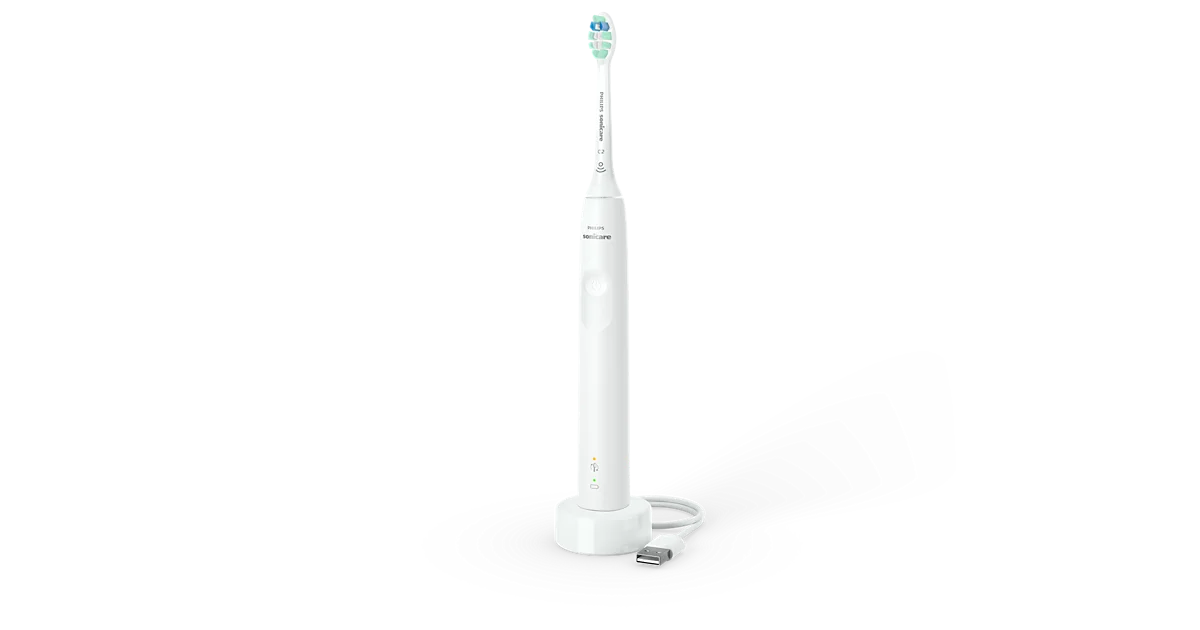
Philips Sonicare 4100
By Philips · Electric Toothbrushes · Health & Lifestyle
- Philips Sonicare sonic toothbrush
- Mid-range Sonicare in the comparison
Lowest price seen
~$48.50 (approx.)
from $48.50 at Amazon
- Amazon ~$48.50 (approx.)View at Amazon
- ManufacturerView at Manufacturer
- NeweggView at Newegg
- TargetView at Target
- Best BuyView at Best Buy
- WalgreensView at Walgreens
- Kohl'sView at Kohl's
- MeijerView at Meijer
- Smith's Food and DrugView at Smith's Food and Drug
- King SoopersView at King Soopers
- eBayView at eBay
- eBay (used) eBay: used, open-box, refurbishedView at eBay (used)
Prices are snapshots. Check the current price with the store.
Summary
A one-mode sonic toothbrush whose reason to exist is the pressure sensor: it warns when you brush too hard and eases off the vibration, with two intensity levels and a BrushSync head reminder alongside. Check the lifespan reports before buying, because owners describe button wear and motor or battery failures around the two-to-three-year mark.
Strengths
- The pressure sensor is the concrete upgrade over the cheaper 1100 and the main reason to pay more.
- Two intensity levels let sensitive users run the brush gentler without changing models.
- Battery endurance is exceptional in testing: about 49.5 days measured against the 14-day official rating.
- BrushSync takes the guesswork out of head replacement.
- A single mode and simple controls keep the handle approachable; Wirecutter names it its runner-up pick.
- Electric Teeth calls it the strongest balance of features and value in the Sonicare line.
Weaknesses
- Owners report the power-button covering fading or degrading over time.
- Separate owners describe motor trouble or lost charge capacity after roughly two years, and one replacement unit failed within a year.
- A long-running owner thread traces failures across Sonicare models to water ingress corroding the circuit boards.
- The battery is sealed and not user-serviceable; the removal instructions exist for recycling, not repair.
- No travel case, spare-head storage or wall adapter comes in the box.
- Genuine C2 heads are due about every three months, a recurring cost on top of the handle.
Verified specifications
| Modes | one Clean mode with High and Low intensity levels. |
|---|---|
| Pressure sensor | warns when you brush too hard; Philips says it also reduces vibration. |
| Timer | 2-minute SmarTimer with a 30-second QuadPacer. |
| BrushSync | tracks head use and prompts replacement via LED and beep. |
| Battery | rechargeable lithium-ion, rated by Philips for 14 days at two 2-minute sessions per day; GearLab measured about 49.5 days per charge and up to 24 hours to recharge. |
| Brush speed | 31,000 brush strokes/min per current exact-model retailer copy. |
| Plaque claim | Philips says up to 7x more plaque removal than a manual brush; not independently reproduced. |
| Charging | USB charging base and cable; a wall adapter is not included. |
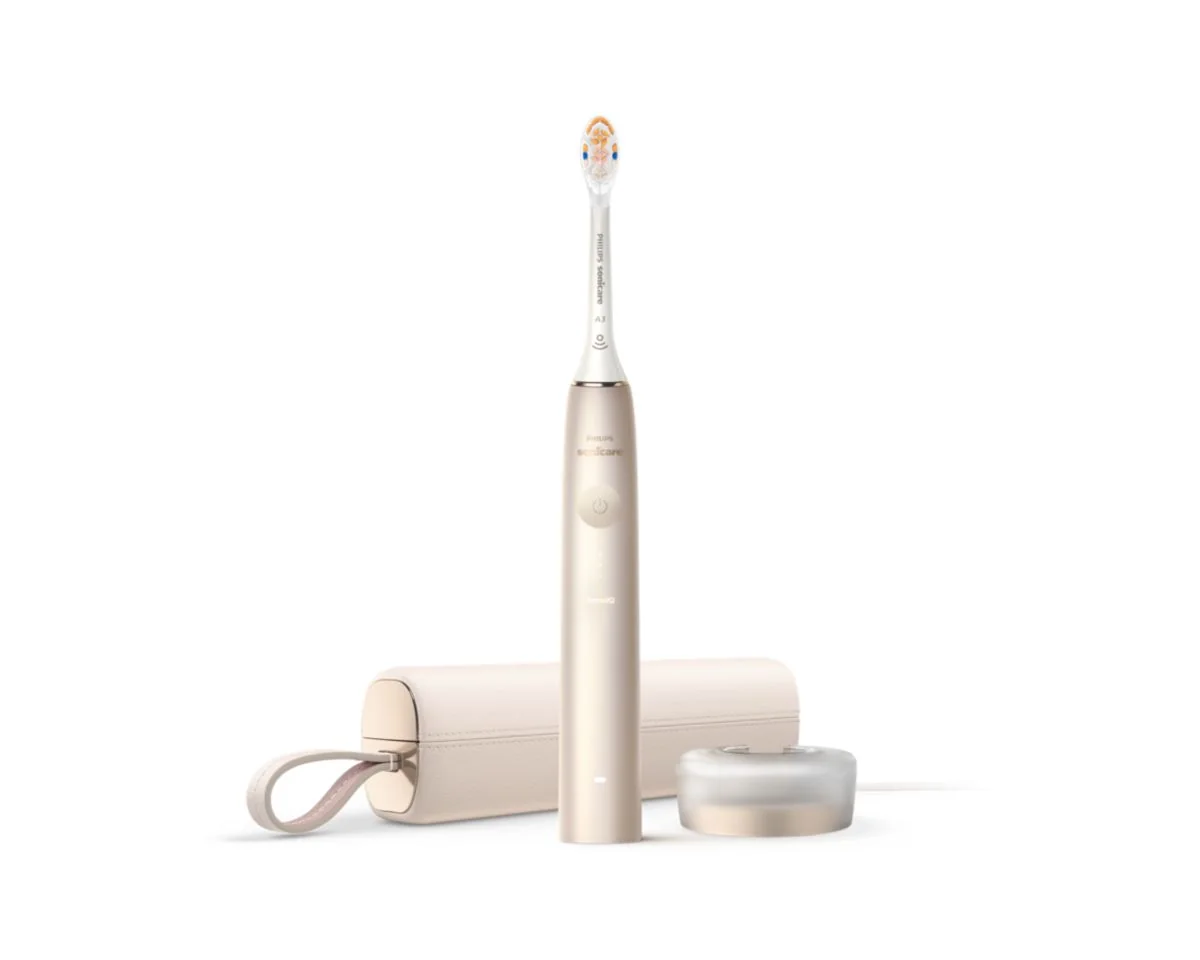
| In the box | handle, one C2 Optimal Plaque Control head, charging base and cable. |
| Dimensions | about 2.48 × 4.29 × 8.66 in and 8.64 oz, which look like package figures rather than measured handle dimensions. |
| Build | plastic handle; the C2 head uses nylon bristles. |
| Variants | HX3681/23 white, HX3681/24 black, HX3681/26 deep pink. |
| Warranty | 2-year Philips limited warranty with proof of purchase. |
Full research notes and sources
Battery life and charging
Philips rates the battery at 14 days with two 2-minute sessions a day. GearLab’s test ran about 49.5 days per charge, and owners of new handles often report more than three weeks, some calling the endurance impressive. Charging is the slow part: up to 24 hours on the base, so pick its parking spot wisely. The gap between the manufacturer claim and the test reflects different usage and measurement conditions, not a broken promise.
Durability, water ingress and repairs
The caution signals are consistent enough to matter. One thread contains several separate owners describing the power-button material fading or degrading, warranty replacements included. A separate long-running r/sonicare thread documents toothbrushes across several models and generations failing after 3-5 years, and concludes the cause is water intrusion corroding the boards around the motor and controls, with buttons misbehaving and random power-on as symptoms; that is family context, not a rate for this handle. Other 4100 owners report motor mount screws loosening over time from vibration, motor trouble or charge capacity dropping after about two years, and one unit that broke after three years where the replacement felt weaker and failed within a year. One owner on r/Dentistry says the battery only lasts a few days after about a year. No source publishes a failure rate, so treat these as signals. Philips covers the brush for two years with proof of purchase; after that, the sealed battery means a failed handle is a replacement, not a repair. Rinse the head and handle connection and keep the area around the button dry.
Brush heads and running costs
The recurring cost is the head. Philips lists the C2 Optimal Plaque Control 3-pack (HX9023/65) at $31.96, Walgreens at $27.99 and Target at $31.99, while the 4-pack (HX9024/77) is $37.96 at Philips. Philips recommends replacing the head about every three months, and GearLab estimates about $44.96 a year in heads on that cadence. Some owners use third-party heads, though Philips recommends genuine ones for BrushSync compatibility. Electricity is negligible on USB charging, and a replacement charging base (CP1977/01) is available from Philips.
Which model this is
This page covers the US white 4100, model HX3681/23, launched in 2023 and sold as ASIN B09LD8T445; the same handle also ships in black (/24) and deep pink (/26). Do not confuse it with the older ProtectiveClean 4100, model HX6811/01, which publishes different figures and gets merged into search results constantly. The listed dimensions above appear to be package metadata; nobody has published measured bare-handle figures.
Is it worth it?
Usual pricing at major US retailers (Target, Best Buy, Walgreens) ran from about $39.95 to $50 as of late 2025. At $35 or less the 4100 is excellent; $35-42 is strong; $42-50 is fair; and above $50 it is weak unless it is bundled with genuine heads, because the recurring head cost and the durability reports weigh more by then. Above $50-60 the Sonicare 5950 or ProtectiveClean 5100 add modes, intensities and a travel case for the premium. If you want pressure feedback without apps, this is the least complicated Philips handle that offers it, so buy it when it dips and check the store panel above for live figures.
Sources
Manufacturer:
- Philips 4100 series product page
- Philips HX3681/24 specification PDF
- Philips C2 Optimal Plaque Control head page
- Philips C2 Optimal Plaque Control 4-pack
- Philips 4100 series support
- HX3681 manual
Independent reviews:
- TechGearLab 4100 test
- Wirecutter: the best electric toothbrushes
- Electric Teeth: Sonicare comparison
- Electric Teeth: Sonicare 4100 vs 5100 vs 6100
- iFixit: Sonicare motor replacement guide
Stores:
Owner reports:
- Power button faded over time (r/DentalHygiene)
- Water ingress across Sonicare models (r/sonicare)
- Battery replacement on a Sonicare 4100 (r/Dentistry)
- Which Sonicare models stay strong (r/BuyItForLife)
- Sonicare no longer built to last (r/BuyItForLife)
- Best electric toothbrush on Reddit (r/TopElectricToothbrush)