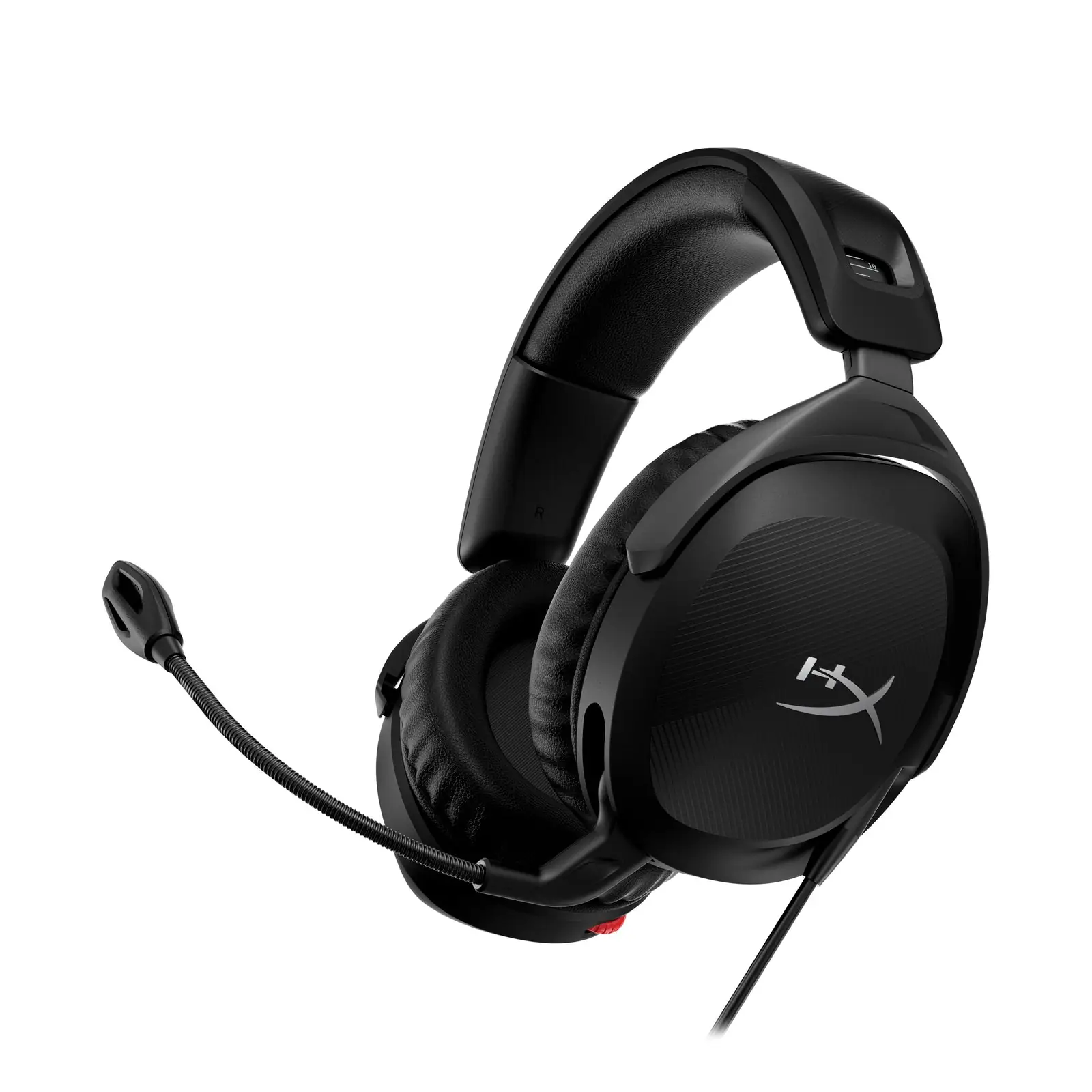
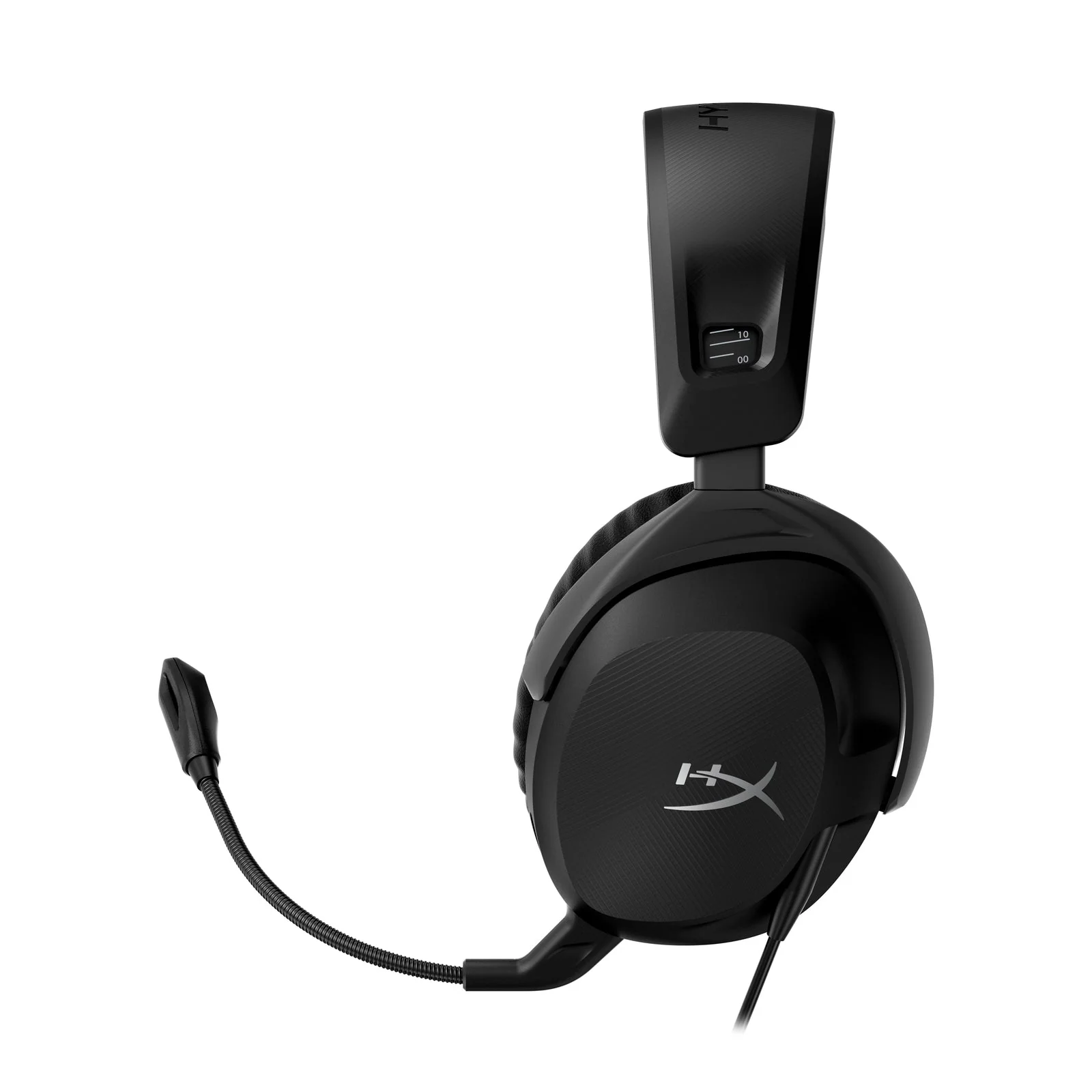
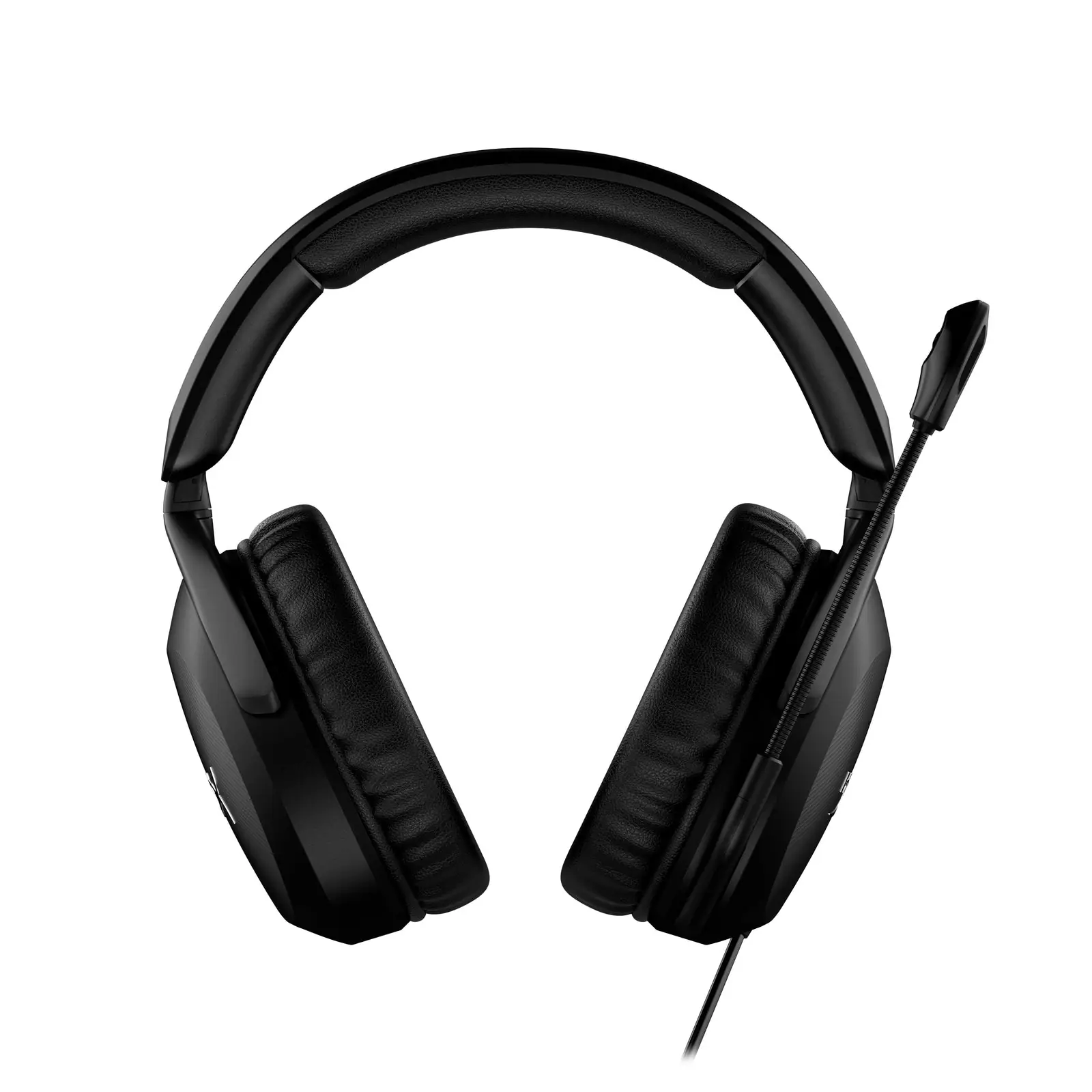
HyperX Cloud Stinger 2 Wired Gaming Headset
By HyperX · Gaming Headsets · Audio & Electronics
- 50 mm drivers
- 300 g weight
- Swivel-to-mute noise-cancelling mic
- 2-year DTS Headphone:X spatial audio license included
Lowest price seen
~$49.99 (approx.)
from $49.99 at Amazon
- Amazon ~$49.99 (approx.)View at Amazon
- HyperXView at HyperX
- Best BuyView at Best Buy
- Office DepotView at Office Depot
- eBayView at eBay
- eBay (used) eBay: used, open-box, refurbishedView at eBay (used)
- WalmartView at Walmart
- B&H PhotoView at B&H Photo
- AdoramaView at Adorama
Prices are snapshots. Check the current price with the store.
Summary
A wired over-ear gaming headset, part number 519T1AA, that measures and wears better than its price and has stayed Wirecutter’s recommendation since 2022. The trade is an all-plastic frame with loose hinges and a cable and mic you cannot detach, so buy it near list rather than above the $50 mark.
Strengths
- Sound tests above its price: SoundGuys scored it 6.4 out of 10 overall and 7.8 for value, and GamesRadar+ said it can sound as good as headsets costing twice as much.
- The microphone beats its price in several tests: PC Gamer found it rejected keyboard and mouse noise, and SoundGuys measured good speech intelligibility.
- Comfort is a consistent positive, including over long sessions and with glasses, and the 272–275 g weight is low for an over-ear.
- The swivel-to-mute mic is simple and liked, and PC Gamer notes the arm is small enough not to get in the way.
- The passive design needs no battery, app, firmware, dongle or subscription.
Weaknesses
- The plastic frame is the weak point: PC Gamer declined to recommend it over loose earcup hinges, and Tom’s Guide called the design flimsy.
- The headband readjusts under light pressure, so a chosen fit does not stay set.
- The cable and mic are permanently attached, so a failure after warranty means opening an earcup and soldering.
- The DTS Headphone:X license lasts only two years, after which the surround effect stops unless you pay.
- The mic is contested: Tom’s Guide and IGN call it quiet and cumbersome, while PC Gamer, SoundGuys and Wirecutter rate it well.
- Isolation is average at 3.7 out of 10, so nearby conversation stays audible.
Verified specifications
| Model and part number | 519T1AA, the black PC-compatible 3.5 mm version. |
|---|---|
| Form factor | over-ear, circumaural, closed back. |
| Drivers | dynamic 50 mm with neodymium magnets. |
| Frequency response | 10 Hz – 28 kHz. |
| Impedance | 32 Ω. |
| Sensitivity | 97.5 dBSPL/mW at 1 kHz. |
| Total harmonic distortion | ≤ 2%. |
| Microphone | electret condenser, bi-directional and passive noise-rejecting; 100 Hz – 15.6 kHz response, -40.5 dBV sensitivity. |
| Cable | fixed 2 m headset cable plus a 15 cm PC splitter. |
| Connection | wired 3.5 mm, 4-pole CTIA. |
| Controls | a single red volume dial on the right earcup; the microphone mutes by swiveling it up. |
| Surround | DTS Headphone:X Spatial Audio with a two-year activation code. |
| Earcups | 90° rotating, with memory foam and leatherette cushions. |
| Frame | plastic; the headset is passive with no battery, no USB audio and no charging. |
| Weight | 275 g on HP’s datasheet, 272 g on SoundGuys’ listing. |
| Dimensions | 179 × 95 × 195 mm. |
| In the box | headset, PC extension cable, DTS activation code and quick start guide. |
| Warranty | 2 years. |
Full research notes and sources
Sound and the microphone
SoundGuys measured the exact model and scored it 6.4 out of 10, with a bass bump around 100–200 Hz and a peak near 7 kHz that it calls the largest deviation from its target curve. The same testing found the microphone response rising to about 4 kHz before dropping off sharply near 7 kHz, giving good speech intelligibility. Wirecutter found clear, detailed sound that holds up at low volume and a mic that reproduced voice without picking up ambient or keyboard noise. Reviewers disagree on the mic, though: Tom’s Guide calls it quiet and cumbersome and IGN calls it cumbersome, while PC Gamer, SoundGuys and Wirecutter all report it working well. Isolation is the weak measured number at 3.7 out of 10, so this is not a headset for a noisy shared office.
DTS Headphone:X Spatial Audio is included as a two-year activation code, not a perpetual license. PC Gamer found it lifted mid-tones on music and made little audible difference in Overwatch, and called having to pay after two years a disappointment. Wirecutter liked the widened soundstage, and SoundGuys considers it worthwhile if you want spatial audio while cautioning it is not right for every game.
Build, comfort and repairability
The headset is entirely plastic, and the earcup hinges are the most consistent complaint across outlets: PC Gamer says they attach to the thinnest part of the headband and are loose enough to flap or break, and IGN found both the headband slider and the earcup swivel too loose. Comfort is the counterweight: IGN reported no discomfort over several weeks of use with glasses, and Wirecutter tested across head and ear sizes. Repairability is thin. The cable and microphone are permanently attached, and earpads are the one wear item that third-party replacements fit; no first-party spare parts for this model were found.
Owner reports, parts and running costs
Owners and buyers report failures that reviewers never hit. A 2025 owner described a failing volume wheel on the right channel that cut out and crackled near maximum volume after roughly a year, with substantial leatherette wear and a bent microphone stem (r/HyperX, 2025). A February 2026 HP customer review says an exact 519T1AA unit broke within a week and the owner believed it was not covered by warranty; that is one report, not a measured failure rate. Another 2026 owner reported the DTS Headphone:X license activated but the feature stayed grayed out in Windows 10 (r/HyperX, 2026). HyperX publishes no failure rate for hinges, cable, volume wheel, microphone or pads.
Running costs are close to zero. There is no battery, subscription or proprietary consumable, and stereo works without any paid software. The likely long-term expense is earpads: Brainwavz sells compatible hybrid cooling-gel pads, part BWAVZ-EP-GAME-SCR-BLK, for $22.13 (Brainwavz, 2026). HyperX publishes no replacement interval and no first-party pad or cable part for this model. A fixed-cable or fixed-mic failure can make repair uneconomic, and CDW states the item was discontinued on 1 September 2026, though HyperX still lists it in stock.
Is it worth it?
At or under $35 it is a strong buy on the measured evidence; the fixed cable, fixed mic and loose hinges are the concessions. Between $36 and $50 it is still good value for someone who wants a simple wired headset, but the newer Cloud Stinger 3 sits at the same $49.99 MSRP and adds metal sliders. Above $50 the case weakens, because HyperX’s Cloud III is $69.99 direct with a sturdier chassis, angled 53 mm drivers and a larger 10 mm microphone. For street prices: HyperX lists the black 519T1AA at $49.99, Best Buy shows it at $46.99 and listed $39.99 on sale in another snapshot with $49.94 from a third-party seller, Newegg sat at $49.89 (Newegg, 2026), and Wirecutter’s comparison shopping listed $50 at Walmart and $40 at Target. Buy the wired 519T1AA and not a sibling: the Cloud Stinger 2 Wireless is a 2.4 GHz model with a 20-hour battery and a different 10 Hz–20.2 kHz response, and the Cloud Stinger 2 Core uses smaller 40 mm drivers with a 10 Hz–25 kHz response at 95 dBSPL/mW for a $39.99 MSRP.
Which model this is
This is the wired black PC version, part 519T1AA, not the Cloud Stinger 2 Wireless (676A2AA) or the Cloud Stinger 2 Core (683L9AA). The white PlayStation SKU shares the 50 mm drivers but lists a uni-directional mic, so do not assume the two colorways are electrically identical. Retailers label the wired model’s mic as active noise cancelling, but it is passive mic noise rejection and the headset has no ANC. The Amazon listing that independent reviews link to is ASIN B0B8PGDMWK; the original research used B0C9ZVMM2X, and neither identifier could be verified against a non-Amazon page.
Sources
Manufacturer:
- HyperX Cloud Stinger 2 black PC product page
- HyperX Cloud Stinger 2 press release
- HP datasheet: HyperX Cloud Stinger 2 (Black), 519T1AA (PDF)
- HP technical details: HyperX Cloud Stinger 2, 519T1AA
- HyperX Limited Warranty Statement
- HyperX Cloud Stinger 2 PlayStation (white) product page
- HyperX Cloud Stinger 3 Wired Gaming Headset
- HyperX Cloud III Wired Gaming Headset
Independent reviews:
- SoundGuys: HyperX Cloud Stinger 2 review
- Wirecutter: The Best Gaming Headsets
- PC Gamer: HyperX Cloud Stinger 2 review
- Tom’s Guide: HyperX Cloud Stinger 2 review
- IGN: HyperX Cloud Stinger 2 review
- GamesRadar+: HyperX Cloud Stinger 2 review
- Laptop Mag: HyperX Cloud Stinger 2 review
Owner reports:
- HyperX Cloud Stinger 2 review (r/HyperX)
- Is the HyperX Cloud Stinger 2 still worth it? (r/HeadphoneAdvice)
- Cloud Stinger 2 DTS Headphone:X activation problem (r/HyperX)
- Cloud Stinger 2 faulty volume wheel warranty question (r/HyperX)
- HyperX Cloud Stinger 2 owner reviews (HP)
Parts and stores: