Google Pixel 11 Pro (256GB)
By Google · Smartphones · Phones & Computers
- Tensor G6 processor with Titan M3 security coprocessor
- 6.8-inch Super Actua display, 3,600 nits peak brightness
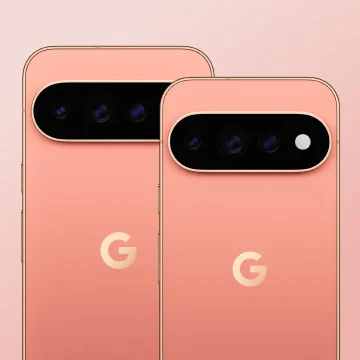
- 50 MP main + 48 MP ultrawide + 48 MP telephoto cameras, 42 MP front camera
- IP68 dust and water resistance, vapor chamber cooling
Lowest price seen
~$1,099.00 (approx.)
from $1,099.00 at Amazon
- Amazon ~$1,099.00 (approx.)View at Amazon
- GoogleView at Google
- NeweggView at Newegg
- Best BuyView at Best Buy
- VerizonView at Verizon
- AT&TView at AT&T
- eBay (used) eBay: used, open-box, refurbishedView at eBay (used)
- eBayView at eBay
Prices are snapshots. Check the current price with the store.
Summary
A compact 6.3-inch Android flagship with a bright 3,600-nit display, strong triple-camera system, and 7 years of OS updates. Check battery life before you buy: independent tests land at 13 hours of streaming, and the 4,850 mAh cell is slightly smaller than the Pixel 10 Pro’s.
Strengths
- The 3,600-nit Super Actua display is among the brightest ever measured on a smartphone; Tom’s Guide measured 2,860 nits peak.
- The triple-camera system with 5x optical zoom and a larger telephoto sensor is what reviewers praise most.
- Magic Capture auto-selects best frames from video and is widely praised as genuinely useful.
- Seven years of OS and security updates reduces long-term obsolescence risk.
- The compact 6.3-inch form factor is pocketable next to larger flagships.
- Wireless charging is upgraded to 25W Qi2.2 from 15W on the previous generation.
Weaknesses
- Battery life draws the harshest criticism from reviewers: PCMag measured 13 hours of streaming, and CNET called results “among the worst we’ve seen this year.”
- The base model has 12GB RAM, down from 16GB on the Pixel 10 Pro, and starts at $1,099 — $100 more.
- Tensor G6’s GPU remains behind Qualcomm and Apple silicon and doesn’t support the latest Vulkan API.
- The 120x Pro Zoom uses generative AI that can produce garbled text and fabricated details.
- No charger in the box; a 30W+ PPS charger is required for maximum wired charging speed and is sold separately.
- EPREL drop testing rated the Pixel 11 Pro “B” (180 drops) versus “A” (270 drops) for other Pixel 11 models.
Verified specifications
| Display | 6.3-inch Super Actua LTPO OLED, 1280 × 2856, 495 PPI, 1–120 Hz adaptive refresh, up to 2,400 nits (HDR) / 3,600 nits (peak). |
|---|---|
| Chipset | Google Tensor G6 (3 nm), Titan M3 security coprocessor. |
| RAM/Storage | 12GB / 256GB (base), 16GB / 512GB, 16GB / 1TB; UFS 4.x; no microSD. |
| Rear cameras | 50 MP wide (f/1.68, OIS), 48 MP ultrawide (f/1.7, autofocus), 48 MP telephoto (f/2.8, 5x optical zoom, OIS). |
| Front camera | 42 MP, f/2.2, 103° ultrawide. |
| Video | Rear 8K@24/30fps, 4K@24/30/60fps; front 4K@30/60fps. |
| Battery | 4,850 mAh typical (4,707 mAh minimum); 30W wired, 25W wireless (Qi2.2-certified Pixelsnap). |
| OS | Android 17, up to 7 major OS updates. |
| Durability | IP68 dust-tight and water-resistant (up to 1.5m for 30 min). |
| Connectivity | 5G (sub-6GHz, C-band, mmWave), Wi-Fi 7, Bluetooth 6.0, NFC, UWB, dual eSIM. |
| Biometrics | Under-display ultrasonic fingerprint, face unlock. |
| Colors | Canyon, Olive, Fog, Obsidian (matte). |
| Weight | 204 g (7.2 oz). |
| Dimensions | 6.0 × 2.8 × 0.3 in (152.7 × 71.9 × 8.4 mm). |
| Audio | Stereo speakers, no 3.5mm jack. |
| In-box | USB-C to USB-C cable, documentation; no charger. |
Full research notes and sources
Display and camera
The 6.3-inch Super Actua LTPO OLED runs at 1280 × 2856 with a 1–120 Hz adaptive refresh rate. Google claims 3,600 nits peak brightness; Tom’s Guide measured 2,860 nits, calling it the brightest display they have tested, and NanoReview measured 3,260 nits in auto mode. Outdoor visibility is consistently praised by owners and reviewers alike.
The rear camera system pairs a 50 MP main sensor with 48 MP ultrawide and 48 MP telephoto lenses. The telephoto has 5x optical zoom and a larger sensor than the Pixel 10 Pro. Magic Capture, which auto-selects best frames from video, is widely praised as genuinely useful for parents and casual photographers. Camera Looks offers creative color profiles that adjust the imaging pipeline rather than applying filters. The 120x Pro Zoom uses generative AI to enhance distant shots; results are mixed, with garbled text and fabricated details in some cases.
Battery life and charging
Battery life is the most consistent complaint from reviewers. PCMag’s streaming test lasted 13 hours at max brightness. CNET found that 1 hour of 4K YouTube streaming at max brightness dropped the battery from 100% to 95%, and 45 minutes of mixed use cost 11% — “among the worst we’ve seen this year.” The 4,850 mAh battery is 20 mAh smaller than the Pixel 10 Pro’s 4,870 mAh.
Charging is 30W wired, slower than many 2026 flagships. PCMag measured 25% in 15 minutes, 46% in 30 minutes, and 100% in 1 hour 21 minutes with a 30W+ PPS charger (sold separately). Wireless charging is upgraded to 25W Qi2.2 from 15W on the previous generation. No charger is included in the box.
Performance and AI features
The Tensor G6 chip with Titan M3 security coprocessor powers the device. The Verge reports CPU improvements of up to 25% over the predecessor, while the GPU scores the same as last year but runs cooler. PCMag’s Geekbench 6 scores (single-core 1,640, multi-core 5,950) are lower than NanoReview’s (single-core 2,688, multi-core 6,871), likely due to different test conditions. The GPU remains behind Qualcomm Snapdragon 8 Elite Gen 5 and Apple silicon.
AI features are mixed. Rambler voice-to-text is highly praised. Night Sight is significantly faster — Google claims 3–4.5x faster than Pixel 10 Pro. But the HiLight notification LED is criticized as too limited (only Gemini voice and favorite-contact calls), and Proactive Assistance only works in very narrow circumstances with specific keywords. Some owners report AI-smoothed camera images that look over-processed compared to the Pixel 10 Pro.
Is it worth it?
At $1,099 MSRP, the Pixel 11 Pro is a mixed value: excellent display, strong cameras, and long software support, but weak GPU, mediocre battery, and reduced base RAM versus its predecessor. It competes with the Galaxy S26+ ($1,099.99) and iPhone 17 Pro ($1,099), both of which offer better GPU performance and battery life. Below $1,000 it becomes more compelling, especially if you prioritize camera, display, and AI features over raw gaming performance. The value proposition is strongest if you’re upgrading from Pixel 8 or older, and weakest for power users, gamers, and those who want maximum battery life.
Which model this is
This page covers the Google Pixel 11 Pro with 256GB storage, model GUJ0N/GPQQ7, sold in the US in Canyon, Olive, Fog, and Obsidian (matte) colors. The 256GB base model ships with 12GB RAM; 512GB and 1TB tiers have 16GB RAM. The US model has no physical SIM tray and uses dual eSIM only.
ASIN B0H832JH4Z
Sources
Manufacturer:
Independent reviews:
- The Verge review
- CNET review
- PCMag review
- Tom’s Guide review
- GSMArena review
- Android Central review
- 9to5Google drop test
- NanoReview
Owner reports: